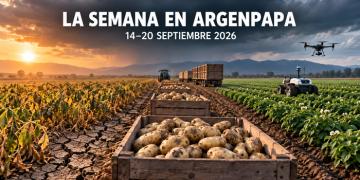
Spain: The potato faces the challenge of increasing production while reducing environmental impact
In Spain, its economic, social and industrial relevance stands out, especially in the regions of Castile and León, Galicia and Andalusia.

In a landscape marked by the challenges of climate change, increasing regulations on nutrient use, and the imperative need to reduce emissions, potato cultivation faces the imperative of transforming into more efficient and resilient systems. In this context, nitrogen fertilization plays a key role, directly impacting yield, tuber quality, profitability, and environmental footprint. The question is no longer how much fertilizer to apply, but rather how to optimize its use to achieve better results.
Crop yield is closely linked to management practices and the type of soil in which it is grown. According to recent research, enhanced efficiency fertilizers (EEFs) are a promising tool for addressing these challenges. An international meta-analysis conducted by Pan et al. in 2023, which included 56 trials across several continents, concluded that EEFs increase agricultural productivity by 7%. Furthermore, they significantly reduce nitrate leaching by 35%, nitrous oxide emissions by 50%, and ammonia volatilization by up to 70%. These figures highlight the positive impact of improving nitrogen fertilization techniques as an effective strategy not only for maximizing productivity but also for mitigating the effects of climate change and protecting water resources.
See moreSoil analysis toolspotatoesAgricultural statisticsThe benefits of using EEF are most evident in slightly alkaline, coarse-textured soils with moderate nitrogen applications. In these soil types, achieving precise synchronization between nutrient availability and crop demand is crucial. This underscores the importance of implementing fertilization strategies tailored to each production system, based on soil analysis, agronomic knowledge, and technologies that improve nitrogen stabilization.
In Spain, trials conducted over more than a decade have validated these innovative solutions. In collaboration with leading technology centers such as ITACyL and CAJAMAR, these trials have demonstrated that ENTEC® fertilizers, formulated with nitrification inhibitors like DMPP and DMPSA, maintain high productivity levels while optimizing nitrogen use efficiency and reducing environmental impact. For example, in fertigation systems evaluated in 2020 by CAJAMAR Paiporta, yields increased by up to 14%, with an 11% increase in average tuber size. Similarly, in sprinkler irrigation, studies conducted by ITACyL between 2019 and 2023 recorded a 20% improvement in yield.
The continuity and rigor of this research have led to the development of more precise fertilization guidelines, less affected by annual climate variations. These agronomic recommendations are based on factors such as expected yield, the preceding crop, and soil characteristics, facilitating their effective implementation at a commercial level. Among the most prominent options for fertilizing potato crops are products such as ENTEC® 13-10-20 or ENTEC® Nitrofoska® Special for initial fertilization and ENTEC® EVO™ 27 or ENTEC® EVO™ 24 for subsequent nitrogen applications.
Thanks to this technology, it is possible to adjust the nitrogen dose more precisely to the specific needs of the crop. This promotes a prolonged release of ammoniacal nitrogen in the soil, reducing losses through leaching or volatilization and significantly increasing nitrogen use efficiency (NUE). The end result is a more sustainable, cost-effective fertilization system that is compatible with the current demands of the agricultural sector.
Furthermore, these advances are complemented by trials adapted to commercial plots where fertilization strategies are customized according to specific local conditions. This practical approach strengthens both the applicability of scientific recommendations and their acceptance by farmers, simultaneously improving Regarding the carbon footprint associated with the agricultural sector, reducing it has become a central priority. Nitrogen fertilization accounts for a significant proportion of the crop’s climate impact, both due to the industrial processes required to manufacture the fertilizers and the emissions generated during their application. Aware of these challenges, companies like EuroChem are leading the development of innovative solutions aimed at maximizing nitrogen use efficiency while minimizing the related environmental impact., sustainability, and profitability.
Fuente: interempresas.net