
Colombia/Peru: ICA expands regional phytosanitary risk management on the Punta Morada potato complex
Within the framework of its functions as the National Plant Protection Organization (NPPO) of Colombia, the ICA participated in the Regional Workshop “Punta Morada Complex of potato and other solanaceous plants”, held at the CIP
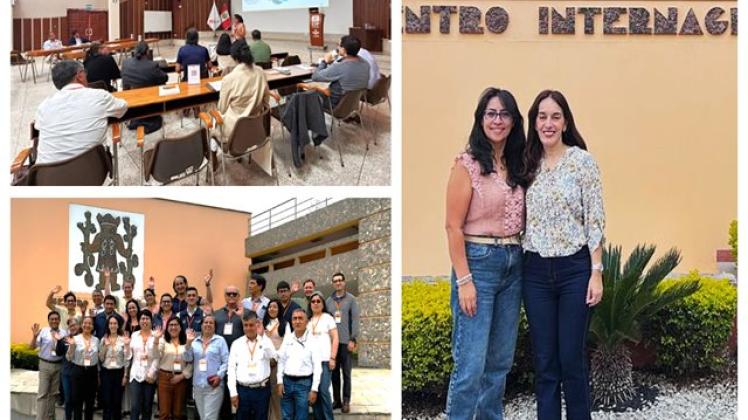
The event brought together representatives from the national plant protection organizations of Peru, Ecuador, and Colombia, as well as research centers and universities from the four Andean Community (CAN) member countries. It also included the participation of a delegation from the Andean Community, establishing a strategic forum for regional collaboration in the analysis and management of this high-impact phytosanitary pathosystem.
The ICA, through the technical directorates of Epidemiology and Phytosanitary Surveillance and Plant Health, of the Sub-management of Plant Protection, presented the main actions carried out in Colombia for the management of the phytosanitary risk of the B. cockerelli - Purple Point and Zebra Chip Complex of solanaceous plants, highlighting the early detection of the vector in 2021, the subsequent identification of Candidatus Liberibacter solanacearum and Candidatus Phytoplasma spp. in different monitored hosts in Nariño and the adoption of phytosanitary measures aimed at the management of the risk associated with this complex.
In its presentation, the ICA highlighted the strengthening of institutional diagnostic capabilities, the implementation of standardized monitoring protocols, and the development of vector insect risk distribution models under climate change scenarios. This has been achieved through the use of artificial intelligence tools such as MaxEnt and Random Forest, as well as regulatory management, which provides technical support for decision-making and the prevention and reduction of economic impacts. Furthermore, the ICA emphasized inter-institutional collaboration with national and regional entities, the productive sector, and academia as a fundamental pillar for the comprehensive management of the pathosystem. Finally, it stressed the importance of strengthening risk communication processes aimed at producers, technicians, and decision-makers.
During the collaborative work sessions, the ICA made strategic contributions aimed at strengthening regional initiatives within the framework of the international standards of the International Plant Protection Convention, highlighting the need to:
- Strengthen technical cooperation among the National Plant Protection Organizations (NPPOs) of the region, promoting phytosanitary governance schemes, regional coordination and inter-institutional work.
- Consolidate and expand technology transfer programs related to the B. cockerelli – Punta Morada and Zebra Chip Complex, aimed at producers, technicians and key actors in production systems.
- Advance regulatory harmonization for seed production, certification and movement, reducing phytosanitary risks and facilitating safe trade.
- Develop models based on satellite imagery, UAVs and mobile devices, as tools for early symptom identification and strengthening phytosanitary surveillance.
- To encourage the production of quality seed in the face of the low availability of certified seed in all CAN countries.
- Expand the focus of regional initiatives towards production systems of export interest, incorporating criteria for facilitating international trade.
A (1) pathosystem is an association between an organism (usually an insect) that transmits a disease (a pathogen) and the disease itself, severely affecting economically important crops.
Fuente: ica.gov.co


