
Chile: Zero Footprint Potato, an agroecological transition protocol for potato production systems in La Araucanía
Two innovative projects will begin development this year in the Araucanía Region, focused on the potato and olive sectors. Both were prepared, submitted, and implemented by INIA Carillanca.
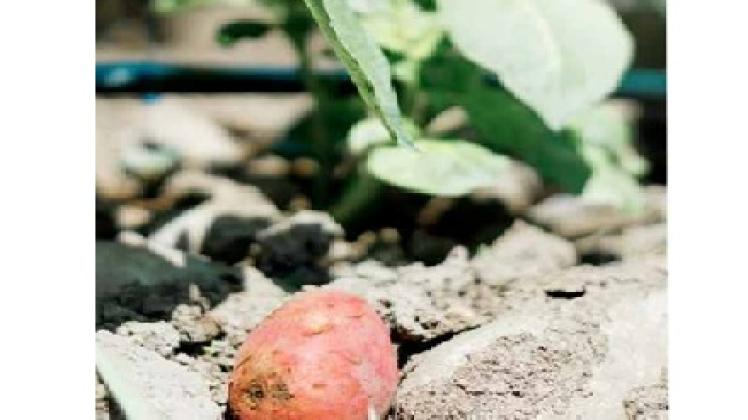
Both projects are funded and technically supported by the FIA (Foundation for Agricultural Innovation) agency. Both the Cautín and Malleco provinces will benefit from these advancements in two strategic areas of vital importance to regional agriculture.
The first project is called Zero Footprint Potato: an agroecological transition protocol for potato production systems in La Araucanía. Researcher Patricio Méndez and a team of specialists are leading the project, which aims to reduce the use of agrochemicals in potato production systems through the implementation of an agroecological transition protocol in a real-world production environment. Farmers from the region’s main potato-producing municipalities are participating.
PEST MANAGEMENT OF AN ANNUAL CROP
The importance of potatoes as an annual crop must be considered. They are highly demanding in terms of agricultural labor, making pest and disease management crucial. Controlling or preventing these problems requires the application of integrated pest management (IPM) strategies, one of the technologies used being pesticides, which, in their various forms, play an important role in the health and development of the crop. These products, with their diverse chemical characteristics, can be highly toxic and persistent, accumulating in plants, water, soil, and biota with serious environmental and human consequences.
Internationally, the Environmental Impact Quotient (EIQ) is used to measure these consequences. This decision-support tool summarizes the potential risk of pesticides to agricultural workers, consumers, and non-target organisms in a single metric. In La Araucanía, the impact generated by potato cultivation is not quantified, and its environmental effects are unknown to stakeholders in the production chain. “Therefore, having tools that allow us to lessen the environmental impact is vital for contributing to sustainable agri-food systems. The proposal aims to reduce the use of agrochemicals in potato production systems through the implementation of an agroecological transition protocol in a real-world production environment, specifically with farmers in the main potato-producing municipalities of La Araucanía. Over a period of 36 months, we expect to implement 200 potato cultivation management plans using the EIQ methodology and provide producers with an application containing technical content adapted to the local context, enabling them to manage pests and diseases sustainably. This will be all part of a public-private technology transfer model, such as the “Tranapuente Agreement,” explained Patricio Méndez.
See moreArgentina PortalAgricultural Technical InformationAgricultural management softwarepotatoAgricultural ProductionTrips to agricultural fairsBooks on potato cultivationPotato ProductionBoardtableIn this context, the project seeks to generate baseline information regarding the environmental impact of potato production systems, through the application of the EIQ methodology; develop a mobile application that integrates the EIQ methodology associated with potato cultivation into a user-friendly platform; implement and validate the agroecological transition protocol with the beneficiary producers and technical teams of the participating municipalities, as well as transfer and disseminate the project results in the main potato-producing municipalities of La Araucanía.
This project complements a Technological Tour carried out by INIA Tranapuente with a group of fifteen producers to Chiloé and Lake Llanquihue, which was also financed by FIA.
HIGH QUALITY SOUTHERN OLIVE OIL
The project "Aceites de Oliva Austral" (Southern Olive Oil) will also be implemented: a technological package for obtaining a high-quality product in La Araucanía. This project is aimed at developing a technological package for obtaining high-quality olive oil under local conditions in the dryland area of Malleco, and is led by researcher Ana Sandoval and her team.
It should be noted that the Araucanía region has some lagging areas where olive cultivation and olive oil production represent a viable alternative for diversifying production and adding value. A study conducted by INIA and funded by FIA (2021) revealed that the olive oil produced in the dryland interior of Malleco stands out for its high oleic acid content (>75%) and favorable organoleptic properties. This area has suitable climatic conditions for cultivation, with production still in its early stages, managed by small-scale family farmers. However, these attributes are not fully realized due to deficiencies in crop management, processing, and oil storage, resulting in lower final quality and reduced competitiveness in the market.
“The proposal aims to develop a technological package comprised of an olive grove management protocol and an olive oil management protocol, enabling the production of high-quality olive oil under local conditions. This involves adapting agronomic management practices to the specific conditions of the inland drylands (irrigation, pruning, cultivation practices), as well as adjusting the extraction and storage stages of the olive oil produced in the region. It includes the development and characterization of various olive varieties optimized for yield and quality, and the production of olive oils (single-varietal and blended) with optimal chemical and sensory quality parameters, along with their respective nutritional labeling,” explains Ana Sandoval.
The technology package will be validated in a real environment with farmers and transferred to the project partners (Municipality of Los Sauces, farmers, INDAP and SEREMI of Agriculture of La Araucanía), through workshops and training courses, complemented by a manual, which will be available to the public in the INIA online library.
Simultaneously, activities will be carried out to disseminate the project’s results. This will establish a specific production model for obtaining high-quality olive oil from southern Chile, reflecting the distinctive qualities identified in the INIA-FIA study, and with the potential to enter the healthy oils market, becoming a viable option for production diversification.
Fuente: portalagrochile.cl


