ECUADOR: INIAP presented the new potato variety INIAP-Cañari
The National Institute of Agricultural Research (INIAP) presented the new potato variety INIAP – Cañari, the result of more than a decade of research in the region.
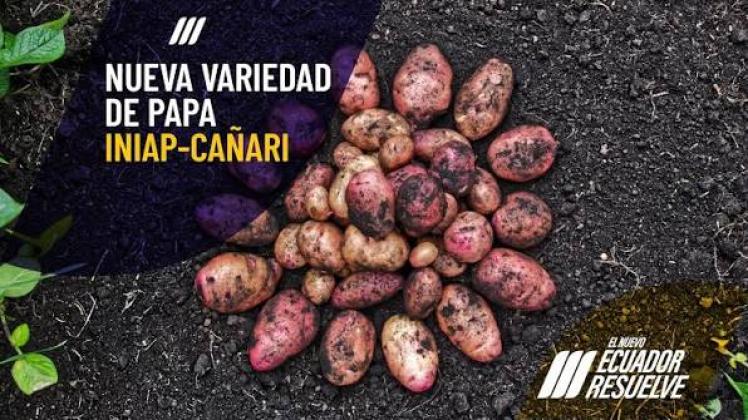
The INIAP-Cañari variety is the result of a thorough breeding process that began in 2007, with the goal of developing a potato resistant to the disease known as "lancha," which has historically impacted production in the region. Performance trials and participatory evaluations of this new variety began in 2013 in the provinces of Azuay, Cañar, and Loja, demonstrating its great potential for local farmers.
Features and benefits of INIAP – Cañari
One of the main advantages of INIAP-Cañari is its high yield and resistance to blight. Compared to the traditional Superchola variety, INIAP-Cañari offers 32% higher yield, representing a significant improvement in productivity. Furthermore, it requires fewer treatments to control the disease, thus reducing costs for producers.
This potato variety is adapted to altitudes between 2,500 and 3,500 meters above sea level, with a growing cycle ranging from 135 to 160 days. In experimental trials, it has shown an average yield of 27 tons per hectare, with 66% of the production being large potatoes, which improves both the quality and profitability of the crop.
Regarding its morphological characteristics, the INIAP - Cañari variety has erect plants that can reach up to 1 meter in height, with light green stems and wavy wings. Its tubers are oblong, with pink skin and cream-yellow flesh. Furthermore, it has a purple sprout without secondary coloration, which distinguishes it from other varieties.
Fuente: Argenpapa