Brazil (2026 Season): INMET Forecast Issues Alert for Producers
Without the direct influence of global phenomena such as El Niño or La Niña, the climate in Brazil will be governed by regional systems, resulting in a very heterogeneous distribution of rainfall in the main producing regions.
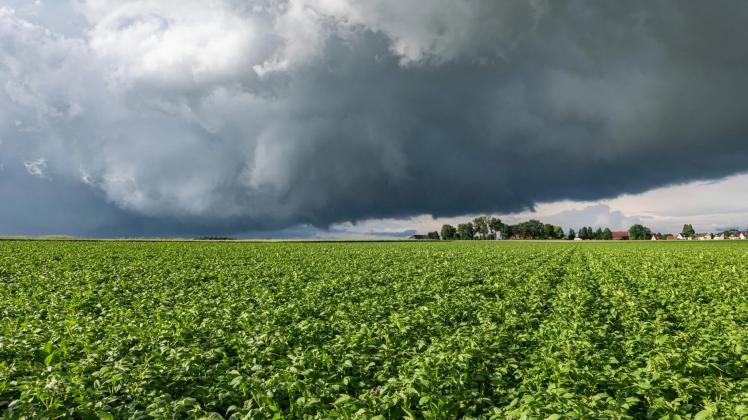
For the agricultural sector, this neutrality means that predictability decreases, requiring producers to continuously monitor short-term local variations.
Comparison: 2025 Harvest vs. 2026 Harvest
Unlike the beginning of 2025, marked by the strengthening of the La Niña phenomenon, the forecast for the 2026 harvest indicates a climate-neutral scenario. In the previous cycle, the phenomenon brought severe droughts to the south and very heavy rainfall to the north and northeast.
In 2025, southern growers faced risky planting periods due to a lack of moisture. However, in the 2026 harvest, the challenge is reversed: excessive rainfall and high humidity in the region will require greater attention to fungal disease management.
See moreLo Valledor MarketOnion pricesCrop insurancePotato priceSan Gabriel MarketPotato cultivation and management coursesCentral Market of Buenos AirespotatoAgricultural consulting servicesSolanum tuberosumThe southeastern region is also experiencing significant changes. While the region had more regular rainfall in 2025, the 2026 harvest season is expected to bring periods of drought and above-average temperatures. This will require greater efficiency in irrigation systems and improved soil water conservation strategies.
Impacts of rain on Brazilian agribusiness
The erratic rainfall forecasted for the start of the 2026 harvest will bring specific challenges for each region of the country. While the North and Midwest are expected to receive average or above-average rainfall, which is positive for the development of early-season soybeans and corn, other regions face water risks.
In the southeast, the forecast of below-average rainfall, coupled with high temperatures, could increase evapotranspiration and cause water stress in summer crops. In the south, excess moisture could impair the final stage of wheat maturation and interfere with harvest and planting planning, increasing the risk of losses from fungal diseases.
The potato sector in the 2026 harvest: Attention to sanitary aspects.
Specifically for potato cultivation, the projected scenario for the first quarter of the 2026 harvest requires greater caution, especially in the southern and southeastern regions. In southern areas, where humidity is typically high, the risk of diseases such as late blight (Pytophthora infestans) and black spot increases considerably, necessitating a more rigorous program of preventative applications.
In the Southeast, the challenge will be irrigation management; the forecast of below-average rainfall may increase production costs and, if temperatures are excessively high, it may impair tuberization and the quality of tubers destined for industry.
Perspectives and recommendations for the producer.
The neutrality of ENSO amplifies the influence of the South Atlantic Convergence Zone (SAC). In practice, this can lead to short periods of intense rainfall followed by prolonged dry spells. To ensure a successful 2026 harvest, ABBIN recommends that growers intensify localized climate monitoring in their microregion.
Investing in efficient soil management, adopting practices that increase water retention capacity, is essential. This strategy will be crucial to mitigating the anticipated water irregularities in the southeastern region.
In the south, the priority must be plant protection. Maintaining a strict fungicide program is recommended, avoiding delays that allow pathogens to proliferate, which are favored by the heat and constant humidity. The start of the 2026 harvest will be characterized by a climate-neutral scenario, according to the forecast from the National Institute of Meteorology (INMET) for the January, February, and March quarters.Fuente: abbin.org