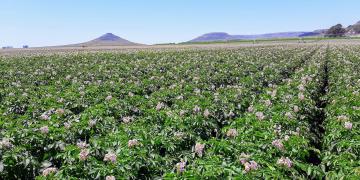
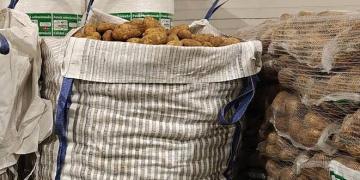
Potatoes are yielding a strong harvest this season and are commanding favorable prices.
Potato-growing regions in Hai Phong are now reaching their peak harvest period.
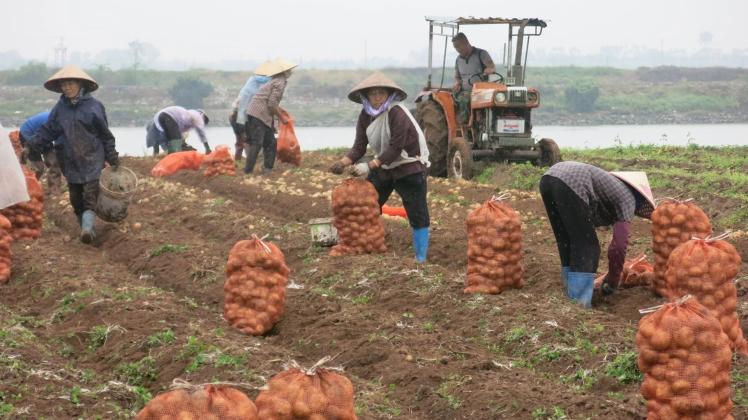
Farmers in Hai Phong’s riverine areas have been busy harvesting potatoes for the 2025-2026 winter crop, taking advantage of favorable weather conditions. In Van Giang village, Hong Chau commune, the atmosphere is bustling with activity. Ms. Vu Thi Thanh from Thien Khanh village shared that her family cultivated over 7 saos (around 0.7 hectares) of potatoes on rented land, yielding more than 9 quintals per sao.
In Hong Chau commune alone, more than 10 households across Thien Khanh and Van Giang villages have planted potatoes on a combined area exceeding 20 hectares. These farmers benefited from coordinated harvest and direct sales to a partnered company that ensured purchase of their products, offering a steady market for their yield.
Farmers in eastern communes like Quyet Thang, Tien Lang, and Vinh Bao started harvesting potatoes early in the lunar year and reported increased yields compared to previous seasons. The uniform quality of tubers has raised spirits in the region. For instance, Mr. Nguyen Van Xuan from Ngan Cau Village in Tien Lang commune harvested close to 45 quintals from 6 saos (about 0.6 hectares), earning approximately 25 million VND in profit.
Data from the Hai Phong Department of Agricultural Production and Plant Protection indicates that around 850 hectares will be devoted to potato farming during the current winter crop, with 12 integrated production-consumption models accounting for more than 250 hectares. These areas have achieved higher yields—1.2 to 1.4 tons per hectare—compared to traditional farming methods, increasing output by an additional 50-100 kg per hectare. With potato selling prices starting at 8,500 VND/kg, farmers can secure average profits of 4-5 million VND per hectare per harvest.
Potato Contract Farming Boosts Expansion
Contract farming with reliable buyers provides farmers with stable income and motivates them to increase cultivation areas, though challenges persist. Mr. Nguyen Cong Vuong, director of the Quyet Tien Agricultural Cooperative in Tien Lang commune, highlighted that using land repurposed from rice cultivation boosts farmers’ efficiency and earnings. Unfortunately, shrinking agricultural land due to urban development plans limits opportunities for production expansion.
Also hindering progress is the dissolution or downsizing of agricultural cooperatives in certain areas, reducing their ability to bridge farmers with businesses. In western regions where farming potential is high, shifting from small-scale production to larger commodity-focused operations poses a challenge, as many are hesitant to abandon traditional practices.
In response, numerous companies are stepping forward to strengthen partnerships with local farmers. A spokesperson from Golden Agricultural Development Joint Stock Company emphasized that their approach includes linking production across the value chain while providing seeds, essential inputs, technical support, and synchronized mechanization—from soil preparation through harvest. This strategy enhances productivity and quality while cutting production costs.
Local authorities are also actively working to promote concentrated production zones, supporting businesses and farmers in formalizing linkage agreements. Measures are being taken to monitor cooperation processes and protect farmers’ interests. Agricultural leaders from Hai Phong affirm that these linkage models not only boost incomes but also transition farming into commodity-based methods that ensure a stable supply for processing needs. The growing success of such models forms a solid foundation for expanding value chains and fostering sustainable agricultural development across the region.
Fuente: vietnam.vn