Brazil: Potato producers face increasing international pressure due to the impact of oil prices.
The rising price of oil has increased costs related to nitrogen fertilizers, diesel, and logistics transport.
The beginning of March 2026 presents a challenging scenario for Brazilian agribusiness. The sector finds itself at a crossroads, caught between the optimism generated by the results achieved in 2025 and the uncertainty surrounding current projections. In this context, a crucial week is approaching, with updates that will influence the entire production chain, from large exporters to small farmers.
Climatic conditions and extreme phenomena: cyclones and the impact of El Niño
See morePotato storage equipmentPotato containersCourses on growing papayaThe weather is taking center stage with the approach of a cold front and the formation of a cyclone affecting the south-central region of the country. Forecasts warn of heavy rainfall, with accumulations exceeding 200 mm in areas such as Minas Gerais and Rio de Janeiro. Furthermore, autumn begins under the strong influence of El Niño, which is expected to persist until May, disrupting traditional rainfall and temperature patterns and generating unseasonably warm weather.
Social and economic costs of natural disasters
Extreme weather events are taking a heavy toll not only in agricultural terms, but also in humanitarian and financial terms. According to figures from Cemaden, more than 336,000 people were affected by natural disasters in 2025, generating economic losses that reached R$ 3.9 billion. In response to this situation, Provisional Measure 1.337/2026 was implemented, providing R$ 500 million in loans for the recovery of businesses and infrastructure in severely damaged municipalities, such as those in Minas Gerais.
Potato market: prices and regional behavior
The market for the Agate potato has shown some stability with relevant variations depending on the region:
- In São Paulo (R$ 57.75/sc) and Belo Horizonte (R$ 56.18/sc), prices remain firm thanks to the balance between supply and demand.
- In Rio de Janeiro, on the other hand, the resumption of harvests after the rains has increased the supply of tubers with lighter skin, which has led to a drop in prices.
- Logistical and quality problems also stand out, with supply disruptions and quality variations attributed to excess humidity.
Regional production: challenges in Bom Jesus (RS)
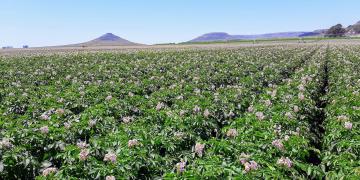
In Bom Jesus, located in Rio Grande do Sul, the harvest during the rainy season faces significant challenges. Heavy rainfall in January delayed planting and increased market uncertainty. Although productivity is high (between 40 and 50 t/ha), climatic factors have had a slight impact on product quality. Given this scenario, producers are adopting a cautious approach to their agricultural practices.
Phytosanitary alert: presence of late blight
The rainy weather, coupled with temperature variations, has created ideal conditions for the proliferation of late blight (Phytophthora infestans). Growers are reporting significant cases of this disease in their crops, which has led to intensified preventative measures to minimize losses.
Macroeconomics: Between GDP growth and falling VBP
See morePotato seedclassAgricultural management softwareEconomic indicators show mixed trends. In 2025, agricultural GDP registered an increase of 11.7%. However, the National Confederation of Agriculture and Livestock (CNA) projects that the Gross Value of Production (GVP) will decrease by 4.6% in 2026, reaching R$1.4 trillion. This decline is linked to a contraction in the prices of key products such as soybeans and corn.
External pressure due to production costs
The global rise in oil prices is impacting Brazilian farmers. The increased cost of a barrel of oil has raised expenses related to nitrogen fertilizers, diesel, and logistics, significantly reducing profit margins even for high-yielding crops.
Fuente: abbin.org