
Ecuador: Tungurahua farmers reach new markets with heirloom potatoes
At over 3,200 meters above sea level, they dedicate themselves to the cultivation and processing of native tubers. In this way, they not only preserve these agricultural traditions but also ensure the livelihood of their families.
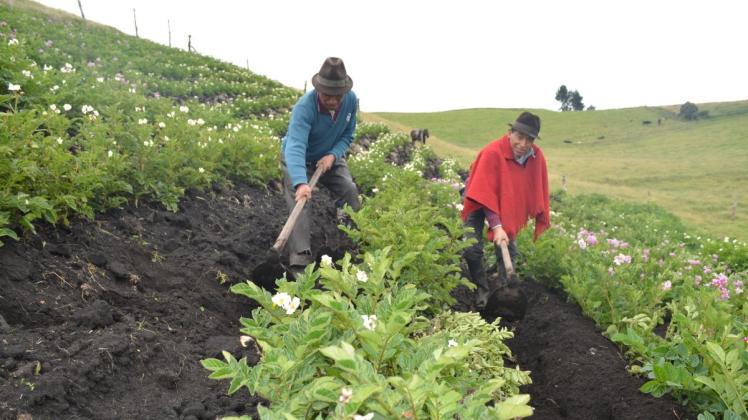
A new day begins in the highlands of Pilahuín, Ambato, in the province of Tungurahua. At over 3,200 meters above sea level, the cold is intense and seeps into the skin, but nothing can stop Crisanto Quilligana. This farmer dedicates his day to caring for the land with a goal that goes beyond simply harvesting: to rescue native potatoes, those that have nourished Andean families for generations.
In the community of Lindero, the cultivated plots are home to potato varieties renowned for their vibrant reddish, purple, and pink hues. These varieties were on the verge of being forgotten due to the expansion of commercial crops and the abandonment of traditional practices. For Crisanto, each recovered seed is more than just food; it is a fragment of the agricultural and cultural memory of the indigenous peoples of Tungurahua.
Four years ago, along with other farmers from the cantons of Quero, Tisaleo, Cevallos, and Ambato, Crisanto joined Agropapa, an organization committed to revitalizing these ancestral crops. Beyond simply replanting them, the real challenge was ensuring a decent livelihood for farming families.
According to Luis Montesdeoca, coordinator of Agropapa: the native potato is not just a food; it is identity. Recovering it means preserving the heritage of our ancestors while forging new possibilities for future generations.
One of the project’s pillars is adding value to the product. Native potatoes are transformed into artisanal chips under the brand YapuChips, whose name, "plowing the land," symbolizes the connection to their roots. Each bag represents the fruit of a collective effort that begins with preparing the soil and culminates in the markets.
The association has prioritized sustainable methods to guarantee both product quality and soil health. They use fallow plots and minimize the use of chemical inputs. According to Montesdeoca, producing one hectare requires an investment of approximately $4,000 and up to 120 days of labor during the agricultural cycle, but the system allows members to work with guaranteed prices within the association, protecting them against market fluctuations.
In 2022, the project took a crucial step with the opening of a small processing plant in the Montalvo parish of Ambato. There, the potatoes are carefully selected, washed, cut, fried, and packaged. For María Punina, a worker at the plant, the process retains its artisanal and family-run essence, which gives the final product its unique character.
Currently, seven people work full-time at the YapuChips plant, and another four work part-time. They process more than 2,500 bags monthly, which reach consumers in provinces such as Tungurahua, Chimborazo, Pichincha, and Azuay, offering not only a healthy snack but also a connection to their cultural roots.
Fuente: extra.ec


