
Bolivia reduced potato imports, limiting them to just 20,000 tons.
In 2024, Bolivia reduced its potato imports thanks to new technologies and certified seed, achieving a significant change in national production.
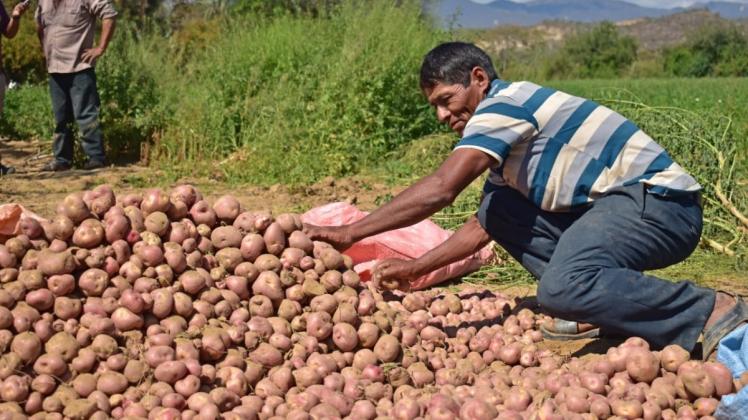
Bolivia has achieved a significant reduction in potato imports during 2024, dropping from 100,000 tons to just 20,000 tons. This progress has been made possible by the use of certified seeds, the adoption of new technologies, and the committed efforts of farmers. This information was provided by Álvaro Mollinedo, Vice Minister of Agricultural Development, during the certificate award ceremony for the “High-Level Course on Commercial and Native Potato Production,” held at the Ministry of Rural Development and Lands.
Reduction of imports
According to Mollinedo, this decrease marks a crucial point for national production. In previous years, the country relied heavily on imported potatoes to meet domestic demand. Therefore, the vice minister emphasized that the policies implemented in recent years have focused on achieving food sovereignty in this sector, with the goal of eliminating the need for imports in the short term.
State investments
The deputy minister also emphasized that government investments are not only aimed at increasing agricultural productivity, but also at training specialists to support producers in the technical management of crops. This training seeks to strengthen agricultural work and ensure its long-term sustainability.
Production projections
According to data from the National Tuber and Root Program, production yields have reached record highs. In the highlands, an average of 54 tons per hectare is produced, in the valleys it rises to 65 tons, while in the mesothermal and eastern regions yields can reach 90 tons per hectare.
These results bring the country closer to achieving self-sufficiency in potato production, with the prospect of even generating surpluses to supply the domestic market. This progress represents a milestone toward food independence and the strengthening of the Bolivian agricultural sector.
Fuente: la patria


