
Chile: Joint efforts continue to promote National Potato Day in the country.
Regional councilor and president of the Innovation Commission of the Los Lagos Regional Council, Eduardo Parada, held a meeting with specialists from the Agricultural Research Institute (INIA), the Chilean Potato Association (ACHIPA)
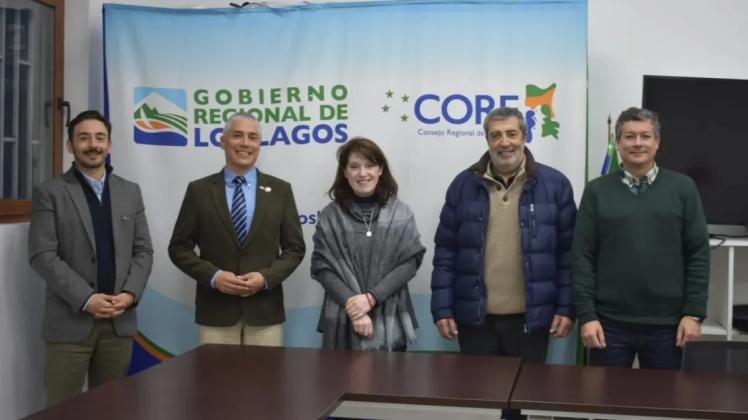
With the aim of promoting research, innovation, and recognition of the potato as one of Chile’s main agricultural assets, Eduardo Parada, regional councilor and president of the Innovation Commission of the Los Lagos Regional Council, led a working meeting with representatives from the Agricultural Research Institute (INIA), the Chilean Potato Association (ACHIPA), the University of Los Lagos, and the Regional Innovation Department of the Regional Government. This meeting marked the beginning of a joint effort to advance this objective, which extends beyond the agricultural sector.
The initiative is based on the rich biodiversity and unique quality of Chilean potatoes. In Chile, it is estimated that there are more than 300 genotypes of native potatoes originating from Chiloé. These varieties, for the most part, have three to four times more antioxidants than commercial potatoes. In particular, purple-fleshed varieties can contain up to 3,000 times more anthocyanins than white-fleshed varieties, in addition to offering a dry matter content of 25% to 30%, resulting in an energy contribution 20% higher than that of improved varieties available on the market. The country’s volcanic soil and humid climate also play a key role in the nutritional composition and flavor of this tuber.
During the meeting, various proposals focused on adding value to the sector were discussed, such as moving towards a designation of origin for the Chiloé potato and establishing a National Potato Day. These initiatives seek not only to highlight the historical and productive aspects of the potato, but also to underscore its cultural relevance at both the regional and national levels.
Eduardo Parada noted that the meeting was key to defining concrete steps toward these objectives. He explained that the discussion focused particularly on the designation of origin for Chiloé potatoes, indicating that this food represents a fundamental part of the region’s historical heritage. The councilor emphasized the commitment made by the stakeholders to work together to bring these important initiatives to fruition.
For her part, Ivette Acuña, president of ACHIPA and researcher at INIA Remehue, emphasized the importance of prioritizing concrete actions that raise the profile of potato cultivation. She explained that the analysis included aspects such as the designation of origin and the official creation of National Potato Day, initiatives that seek to highlight its significance not only regionally but also nationally. She also underscored the effort to involve all links in the production chain, including academic institutions such as the University of Los Lagos.
Nicolás Pizarro, regional director of INIA Remehue, emphasized the importance of collaborative work between institutions. He stressed that INIA has been dedicated to research and development in potato cultivation for over four decades and that these initiatives represent significant progress for the sector. He affirmed that the organization will remain steadfast in its support, along with its team of researchers and in collaboration with ACHIPA.
Genetic improvement specialist Manuel Muñoz, also from INIA Remehue, stated that the meeting provided technical arguments to support the application for the designation of origin. He affirmed that the meeting was highly productive and allowed for the establishment of key agreements that will facilitate significant progress in this area.
Finally, Julio Kalazich, director of ACHIPA and professor of Agronomy at the University of Los Lagos, emphasized the need for official recognition of the Chilote potato variety. He noted that this variety is not only important for Chile, where it ranks second among the country’s most important foods, but also globally. He stated that establishing a National Day would help to highlight this agricultural heritage, increase its consumption, and improve the living conditions of producers. He emphasized the progress made so far and called for increased political support to bring this important proposal to fruition.
Fuente: diariopaillaco.cl


