Argentina: Potato production had a 2025 to forget
Potato production in our country is experiencing one of its most challenging years in the last decade. According to industry representatives, the sector has seen eleven consecutive months of losses and closed 2025 amidst a severe price crisis.
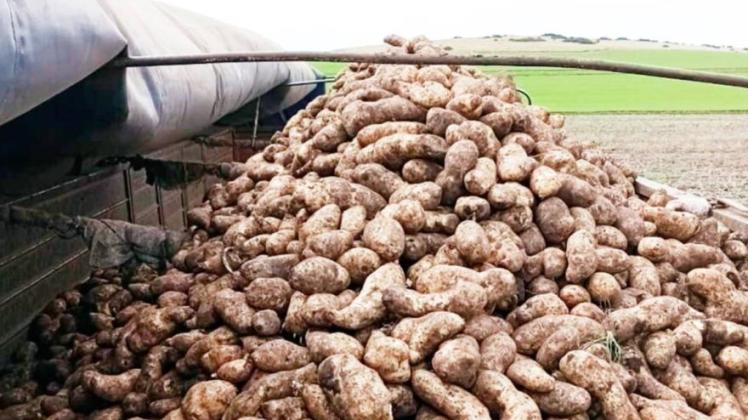
A lack of competitiveness in exports, a slowdown in industrial purchases, and weakened domestic consumption created an adverse scenario that further eroded the profitability of the crop. While the situation is widespread, the blow was particularly severe in the province of Buenos Aires , which accounts for nearly half of the planted area.
Within the province of Buenos Aires, the southeast once again became the epicenter of the crisis. This region, key for potatoes for consumption, processing, and seed, suffered from a combination of oversupply, weather problems, and prices that failed to cover costs, with some fields even going unharvested.
See morePotato storage equipmentCentral Market BAPotato storageEfficient irrigation systemsAgricultural trips (Argentina)Specialized agricultural machinery (mumps)Potato pricesAgricultural work clothesPlanting toolsLo Valledor MarketThis situation was reflected in CONINAGRO ’s regional economy indicator , which kept potatoes in the red zone throughout the year, revealing a sustained decline in the sector. In many cases, the crisis forced farmers to reduce plantings and, in more extreme situations, to abandon production altogether.
To analyze the year’s balance, the causes of this scenario and the challenges facing the sector, NewsDigitales spoke with Mario Raiteri , secretary of CONINAGRO, vice president of the National Federation of Potato Producers and potato producer from the Buenos Aires town of Mechongué.
From his dual leadership and production role, Raiteri reviewed the figures for 2025 and described the critical situation in Buenos Aires - with a focus on the southeast - questioned the distortions in the commercial chain and raised what conditions should be met to begin reversing the scenario in 2026.
-What is the year’s balance sheet for the potato sector and producers?
CONINAGRO has a traffic light system for its 19 regional economies, including potatoes. And potatoes were in the red zone from the beginning of the year until the last assessment in November. This is due to the serious situation we face: there was an abundant supply, but external demand has stalled because the exchange rate is unfavorable, and the internal costs make it impossible for factories to make a profit.
I’m talking about the big players, the ones that ship to neighboring countries, especially Brazil, mainly in the form of frozen pre-fried products. These are Land Weston, Simplot, McCain, and PepsiCo. These four major players had these problems and couldn’t sell all their production. In fact, they diverted much of their industrial production to the fresh market, further increasing an already generous supply in all regions of the country.
There have been good potato harvests, and the price was even plummeting in the domestic market. It’s true that wages can buy more, but many people are unemployed or lack purchasing power. Although prices are lower this year than in 2024, and it seems people can buy more, the reality is that the wages of those fortunate enough to be formally employed aren’t very good, and they are suffering from the rising costs of services and other sectors of the economy. That’s why the true potential of a food that is as important to Argentinians as it is worldwide hasn’t been reflected in the market.
See moreCentral MarketCrop insuranceCertified potato seedspotatoOnion pricesPotato packaging suppliesAgricultural management software (potato)Advertising on the portalPotato pricespapasPotatoes are the world’s third most important food, so it was a really tough year. A year that brings us worry. There’s no credit available; it’s only now becoming more accessible, but there wasn’t any during planting season in the main growing regions. In southeastern Buenos Aires province, some potatoes had to be left unharvested. The same thing happened to me as to many other producers.
It’s sad to see that the cost of getting them to market can’t be covered by the product’s price, and there are people who don’t work harvesting them and others who can’t afford to eat them, perhaps struggling to get food. You see them wasted in the fields because they couldn’t be harvested, and of course, that’s a loss for the producers.
In general, we have all had to reduce our plantings, and many smaller producers, with less resources or who are not diversified into other productions, that is, those who grow a monoculture like potatoes, have not been able to plant again.
-Is the situation in the province of Buenos Aires, in the southeast, practically the same or does it have some particular situation?
-Of the 90,000 to 100,000 hectares planted in the country, half are in the province of Buenos Aires: approximately 50,000 hectares, including potatoes for consumption, potatoes for industry, and seed potatoes.
Unfortunately, the area that had to be left unharvested was the southeast. I’m a producer from Mechongué - General Alvarado - a small town 70 kilometers from Mar del Plata, 70 kilometers from Necochea, 50 from Balcarce, and 50 from Miramar: it’s in the center of that cross, and we had to leave the harvest unharvested, in addition to having problems with water and also with hail in these recent storms. We had to replant due to excess water and delay planting, all of which means higher costs and lower yields.
Furthermore, in the specific case of the stone, the cost of trying to get the crop back on track also increases, although if the plant remains untreated for more than 60 days, it won’t recover and loses much of the yield potential necessary to make the economics work. Regarding Buenos Aires, the potato situation was complicated. We don’t want to be pessimistic, but the Federation needs to explain to the Government that we, as a sector and producers of such an important food, need policies. Short-term policies are what they can implement at the micro level to help us continue operating.
See morePope of HollandSan Gabriel MarketSolanum tuberosumPotato storage equipmentAgricultural consulting servicesPotatoCertified potato seedsPotato storage equipmentCentral MarketPope NewsAnd then we need macroeconomic conditions or a context that favors exporting or reaching neighboring countries, because what we sell beyond our borders is value-added potatoes, seed potatoes, potatoes with added technological value. But for these potatoes to reach consumers, we need to be competitive, to have lower costs. At the micro level, this means lower taxes, more affordable credit, knowledge, and infrastructure to store potatoes during storms and prevent price distortions in the markets.
It also means oversight of the supply chain. We, as producers, are trying to institutionalize the chain and ensure our workers are registered, but we also need the commercial chain to understand that it can’t pass on 1000% of what the producer is paid to the consumer—the two weakest links in the chain. Such a difference is unacceptable without adding any value, based solely on logistics and distribution costs. And this isn’t just happening because we transport potatoes from southeastern Buenos Aires province to Chaco or Jujuy. It’s happening in the greengrocers of Mar del Plata, Otamendi, and Balcarce—those located right next to the production area.
-What percentage of production is exported?
-25% went abroad. This year, unfortunately, companies reduced their contracts with producers and didn’t even buy all the potatoes they had contracted for last year. That’s why, instead of going abroad, those potatoes flowed into the domestic market, further depressing prices due to an oversupply generated by the good harvest and this situation.
Is state infrastructure still a deficit?
The roads are very bad, but we’re talking about infrastructure development, like warehouses, cold storage facilities, and refrigeration plants. We have that kind of more direct infrastructure. Large collection and distribution centers near consumption points are the infrastructure that needs to be strengthened today. And then there’s the gap between the producer and the consumer. I think some costs have skyrocketed, like rent and utilities, and I understand that, but the distortion can’t reach 100%, it can’t be like that.
-Are there discussion forums for this, to debate the production chain, or are they not formalized?
"No, they’re not formalized. It depends on the provinces, which are trying to work in the same direction as we’re expressing. We’ve raised these issues with Minister Javier Rodríguez —from the Buenos Aires Province Ministry of Agrarian Affairs —including the protection of the seed-producing area and improving the quality of potatoes produced there, which includes three municipalities in the center of Buenos Aires Province: San Cayetano, Gonzáles Cháves, and Tres Arroyos."
You have the possibility of having shielded that area from the presence of Andean potatoes, which carry a virus that can devastate the seed-producing region if it appears, or nematodes if they come from Mendoza or if they are genetically modified, like the Spunta TICAR. If they grow it in the same seed-producing region, we lose that opportunity because the markets don’t want genetically modified products. And even gene editing, which is suppressing or enhancing the function of a gene in the potato itself, is under discussion. In contrast, a genetically modified potato is one where genes from other species are introduced into the potato.
-Did they make any other requests to the authorities?
-We also went to the Ministry of Agriculture to talk with the people at INASE, because Argentina has the potential to export seed potatoes to more distant locations. In that case, the added technological value justifies paying for logistics or long-distance freight. Potatoes for consumption have to go to a neighboring country, which is essentially Brazil or Paraguay. But with seed potatoes, we have potential.
The world, and even Europe, has areas that are almost depleted. They typically sow their seeds facing the North Sea, as the winds dislodge the aphids, which are the main vectors of viruses, but they sow them at the same time as they are consumed. We are fortunate to have growing areas for both consumption and seed throughout the country that are fresh, uncontaminated, and not overexploited.
See morePotato cultivation and management coursesStorage reductionPotato seedsCreole potatoSan Gabriel MarketVarieties of papaAgricultural consulting servicesEfficient irrigation systemsSolanum tuberosumFungicides and pesticides for potatoesThere would be a possibility that many companies could shift their production abroad. Because also, when there’s a crisis like this, seed producers sell fewer seeds and lose all that investment. The investment in knowledge they put into that potato. And it ends up, if they’re lucky, going to the market to be consumed.
We are working to institutionalize the supply chain, to streamline it and eliminate all joint work with UATRE, the Rural Workers’ Union. We have temporary workers to improve working conditions and ensure that it is registered, formal employment.
We are trying to speak with the authorities to correct these situations, especially with the provinces, so they can identify the reason for the price difference between the consumer and the producer. We are becoming more demanding in the production of seed potatoes and are trying to open markets for those same seed potatoes.
Obviously, the exchange rate and the cost of production in Argentina depend on the government’s decisions within the framework of its economic policy. If there isn’t a favorable exchange rate for exports, we’re in serious trouble. If costs are too high and we don’t have the same opportunities as foreign companies, we won’t just fail to export; we’ll also experience what’s happening in other sectors of the economy: potatoes from other countries will start appearing in Argentina.
-How do you envision 2026 given this scenario? Is it reversible or will it take more time?
Everything depends on time, a factor controlled by God. If there are fewer potatoes, there’s a chance the product will hold up better because it commands a better price. Costs have been very high; savings have been used, and the impact will be felt because they didn’t have access to financial assistance through loans.
We producers are always optimistic. The National Federation of Potato Producers strives to be extremely careful when we meet and hold assemblies, regardless of the fortune we have in each region regarding having the right climate for the potatoes to produce at their maximum, without disease, frost, drought, hail, or flooding. That’s another matter. But we need to be careful because there are economic adjustments that we don’t see happening.
Fuente: newsdigitales.com