Argentina (Publications): "Andean potatoes and quinoa. Origin, current status and recipes of ancestral South American crops."
EDIUNC, the publishing house of the National University of Cuyo, presents Andean Potatoes and Quinoa: Origin, current status and recipes of ancestral South American crops, a book coordinated by Carlos Marfil, which focuses on agrobiodiversity.
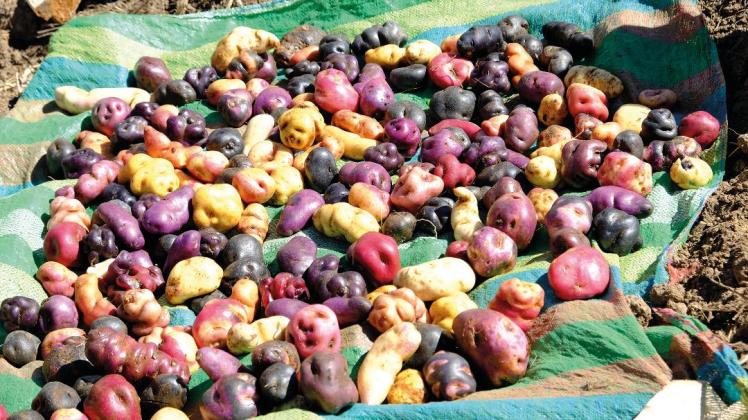
Agricultural biodiversity presents major challenges worldwide, says Carlos Marfil in the preface to Andean Potatoes and Quinoa: Origin, current status and recipes of ancestral crops, a work that has just been released by the EDIUNC imprint.
In the case of Mendoza, where productive and economic concentration also leaves small producers and regional economies relegated, the commitment to agrobiodiversity is gaining strength and was one of the axes of the "I Meeting of Andean Crops in Mendoza 2023, Andean potatoes and quinoa", this book is the child of that communion of producers, researchers and cooks.
The chapters address –from different aspects– the cultivation and marketing of Andean potatoes and quinoa as drivers of innovation and agricultural sustainability.
Recipes for preparing dishes made with these ancestral foods are included, created by renowned chefs. It’s a book that will appeal to a diverse range of interested parties, but will also resonate with a general audience.
Andean potatoes and quinoa, ancestral crops
Native Andean potatoes (Solanum tuberosum Andigenum Group) are a set of varieties cultivated and preserved by the Andean peoples for millennia from Northwest Argentina to Venezuela, with their center of origin and diversity in Lake Titicaca, the highest navigable lake in the world, located on the border of Bolivia and Peru.
Quinoa (Chenopodium quinoa), for its part, is native to South America, with a wide distribution along the Andes Mountains, from northern Colombia to central Chile and Argentina. It is a superfood, providing energy and regulating nutrients, and contains all nine essential amino acids.
Andean potatoes also have high nutritional value. Their content of secondary metabolites and antioxidants such as vitamin C, phenolic compounds, carotenoids, anthocyanins, and mineral micronutrients makes them remarkably beneficial to health, which is why they are very attractive, in demand, and promising for continued growth in their cultivation in the region.
Both of these ancestral Andean crops are increasingly in demand by consumers and the gastronomic sector.
The authors
The group of authors of Andean Potatoes and Quinoa represents a broad interdisciplinary range. It includes scientists from diverse fields, but primarily from agronomy, economics, biology, and biotechnology, as well as rural producers. Here we review the names that contributed to this book:
Alejandra Arce, Ramón Alejandro Balmaceda, | María Florencia Barbarich, Eduardo Barraud, Pablo Bauzá, Rita Noelia Cartagena, Darío Carlos Castro, Nicolás Chavarría, Magda Alejandra Choque Vilca, Irma Mirta Aurelia Cusi, Stef de Haan, Cecilia Décima Oneto, Analía Díaz Bruno, Alejandra Mariela Díaz Sambueza, Silvina Divito, Sergio Feingold, Eugenia Galat Giorgi, Claudio Galmarini, Carolina Gandini, Vilma Hualla, Henry Juarez, Emiliano Kakisu, Laura Lafalla Manzano, Carlos Federico Marfil, Gabriela Alejandra Massa, Israel Navarrete, Natalia Norero, Javier Ochoa, María Florencia Rey Burusco, Lucía Rodríguez Gargantini, María Isabel Quiroga Martín, Juan Rosenthal, María Sance, Federico Soria, Sofía Sucar, María del Rocío Torres.
You can get the book in our online store. You can also find it at our headquarters at Sarmiento 607, in the city of Mendoza, and at the Librería Universitaria Argentina, located at Ecuador 871, CABA.
Book specifications:
“Andean potatoes and quinoa: Origin, current state and recipes of ancestral crops”
South Americans. General coordination by Carlos Federico Marfil
Collection: Veraison
Publisher: EDIUNC
Edition: First
ISBN: 978-950-39-0441
Year: 2026
Cover and binding: Paperback
Pages: 206
Subjects: Agronomy | Agriculture | Cultivation
Fuente: EDIUNC, Editorial of the National University of Cuyo