Spain: Intense heat halts potato production in Castile and León.
Eduardo Arroyo, president of the Potato Producers Association of Castilla y León, pointed out that the high temperatures recorded in recent weeks have subjected the crop to intense water stress, which has stopped its growth.
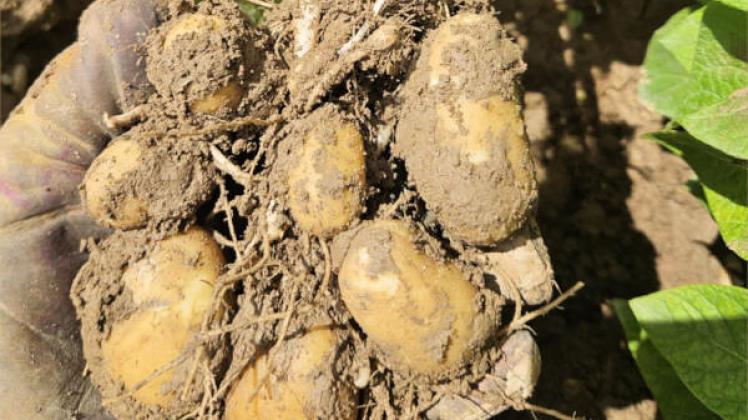
According to Eduardo Arroyo, president of the Potato Producers Association of Castile and León, the high temperatures recorded in recent weeks have placed the crop under severe water stress, halting its development. With thermometers reaching nearly 34°C for several consecutive days, the plants have reduced their activity and stopped investing in tuber development, jeopardizing the final yield for the 2026 season. The physiological explanation Arroyo offers for the crop’s behavior during these periods of sustained heat is that the plant’s growth stops at temperatures above 30°C. Many producers have had to mobilize their entire irrigation allocation to prioritize potatoes over other crops, resulting in water shortages at the farm level.
Heat stress and irrigation
The sustained heat has prevented the crop from closing rows properly and slowed tuber emergence, factors that translate into a loss of yield potential if conditions don’t normalize. Technicians point out that as long as temperatures remain above 30°C, the plant’s "defense mode" will limit photosynthesis and the translocation of carbohydrates to the tubers. The crop’s health currently shows a positive aspect regarding the incidence of foliar fungi, as the dryness reduces fungal pressure, but this advantage doesn’t compensate for the potential loss in kilograms per hectare. The agricultural leader indicates that the situation could improve when weather forecasts predict a drop in temperature to around 28°C in the coming days, allowing active growth to resume.
For the 2026 season, the area sown in Castile and León is estimated at around 17,500 hectares, a figure that reflects an adjustment compared to the initial forecast and that will affect the regional supply. Provisional data indicate that heat stress could reduce yields by around 10-15% compared to a standard season, which would mean yields below the 45-46 tons per hectare expected under optimal conditions. These estimates, Arroyo warns, will need to be confirmed in the next two weeks when the plants have passed the critical phase and it will be possible to objectively assess the size and number of tubers. The actual impact will depend on the duration of the heat wave, the response to irrigation, and the local heterogeneity between plots.
Contracts, varieties and start-up schedule
The market shows contractual uncertainty in 2026: processors and packers have not clearly increased their contracted volumes, leaving many producers vulnerable if the harvest ultimately decreases. Arroyo warns that those who have not yet secured agreements are assuming a high risk in this context of tight supply and potential yield declines. Regarding varieties, diversification continues to be a key strategy for the sector to stagger supply and reduce dependence on a single genetic variety. Alongside Monalisa, which is now geared more towards the tortilla industry, varieties such as Colomba, Soprano, and Agria have gained traction. This diversification allows for the distribution of harvests from July to October and aims to stabilize the supply of fresh potatoes on supermarket shelves.
The situation in Andalusia introduces a market variable: Andalusian potatoes are arriving late from planting and, due to the high temperatures, harvesting could be brought forward in the coming weeks regardless of the tubers’ optimal condition. Arroyo recommends that the harvesting campaign in Castile and León not begin before July 15th to avoid market overlap and reduce pressure on local prices; coordinating harvest times between geographical areas is one of the tools for maintaining prices.
Perspectives and concrete actions
The main uncertainty will be resolved once the plants have passed the current stage, at which point it will be possible to determine the number and size of the tubers. According to the experts consulted, this could occur within 10 to 15 days, provided temperatures moderate. In the short term, the actions recommended by experts and producers include adjusting irrigation, prioritizing the plots with the greatest potential, maintaining continuous monitoring of soil moisture, and employing soil management practices that promote moisture retention. In areas with limited irrigation, decisions regarding fertilization and crop management will be key to maximizing the efficiency of available water.
Within the sector, Castile and León stands out as a region with one of the longest potato growing seasons in the European Union. Local cooperatives have opted for stable contracts and varietal diversification to meet a demand that extends over time. One example is Prodeleco, a cooperative in León that remains focused on the Agria variety, managing a considerable acreage supported by agreements with the processing and distribution sectors. Despite this, factors such as limited acreage, early heat waves, and market dynamics pose a significant challenge to ensuring that the 2026 season unfolds with the least possible negative impact on producers and other links in the supply chain.
In the coming weeks, producers, technicians, and buyers will be closely monitoring weather conditions and initial field data. These assessments will be crucial for adjusting supply forecasts, finalizing contracts, and planning harvest schedules that minimize overlaps between regions and reduce price pressures.focused on the Agria variety, managing a considerable acreage supported by agreements with the processing and distribution sectors. Despite this, factors such as limited acreage, early heat waves, and market dynamics pose a significant challenge to ensuring that the 2026 season unfolds with the least possible negative impact on producers and other links in the supply chain.In the coming weeks, producers, technicians, and buyers will be closely monitoring weather conditions and initial field data. These assessments will be crucial for adjusting supply forecasts, finalizing contracts, and planning harvest schedules that minimize overlaps between regions and reduce price pressures.Fuente: agronews.com